Loading...
Orthodox
Official WebsiteOrthodox
Founded 33
Constantinople (Ecumenical Patriarchate)
2,292 churches
Eastern Orthodox Christianity represents one of the oldest branches of Christianity, emphasizing continuity with the ancient undivided Church. Orthodox worship is richly liturgical and mystical, centered on the Divine Liturgy, the Theotokos (Virgin Mary), icons, and the ongoing transformation of the believer into the likeness of God (theosis). In North America, communities trace their heritage to Greece, Russia, Serbia, Antioch, and other Orthodox nations.
Doctrine
What We Believe
Salvation
Theosis — ongoing union and transformation in God through grace and the sacraments
Scripture
Holy Scripture and Holy Tradition together form the revealed Word of God
Baptism
Infant baptism by triple immersion; followed by Chrismation
Communion
True body and blood of Christ; received only by Orthodox Christians
Worship Style
Byzantine liturgy; incense, icons, chanting, and ancient prayers
Church Government
Episcopal; governed by bishops in a conciliar structure of patriarchates
Women in Leadership
Ordained priesthood reserved for men; women serve as deaconesses and in monastic roles
LGBTQ+ Stance
Traditional; marriage defined as between a man and woman
Geography
Where to Find Orthodox
Ontario194
New York193
Pennsylvania183
California149
Illinois120
New Jersey104
Florida96
Ohio87
2,292 Orthodox churches
Browse the full directory
Directory
Featured Orthodox Churches
4.8(541)
Holy Virgin Cathedral
Holy Virgin Cathedral is part of the Russian Orthodox Church Outside of Russia, dedicated to serving the community through regular liturgies and special events, including a strong emphasis on prayer and support for the departed.
6210 Geary Blvd, San Francisco, CA 94121
+1 415-221-3255
Thursday: 7:30AM-7:30PM
sfsobor.com
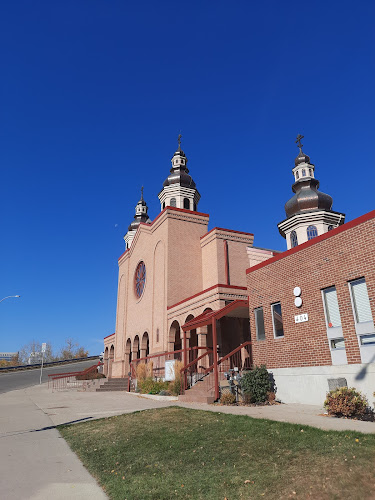
4.9(519)
St. Vladimir's Ukrainian Orthodox Sobor
St. Vladimir's Ukrainian Orthodox Sobor is a welcoming community dedicated to supporting Ukrainian evacuees and providing humanitarian aid while promoting Orthodox Christian education and worship.
404 Meredith Rd NE Suite 1, Calgary, AB T2E 5B2
+1 403-264-3437
Thursday: 9a.m.-4p.m.
stvlads.com
4.7(353)
St. Nicholas National Shrine
Saint Nicholas Greek Orthodox Church and National Shrine is a place of pilgrimage and remembrance, rebuilt after being destroyed on 9/11, dedicated to bringing light and life to Lower Manhattan.
130 Liberty St, New York, NY 10006
+1 212-227-0773
Thursday: 10AM-5PM
stnicholaswtc.org
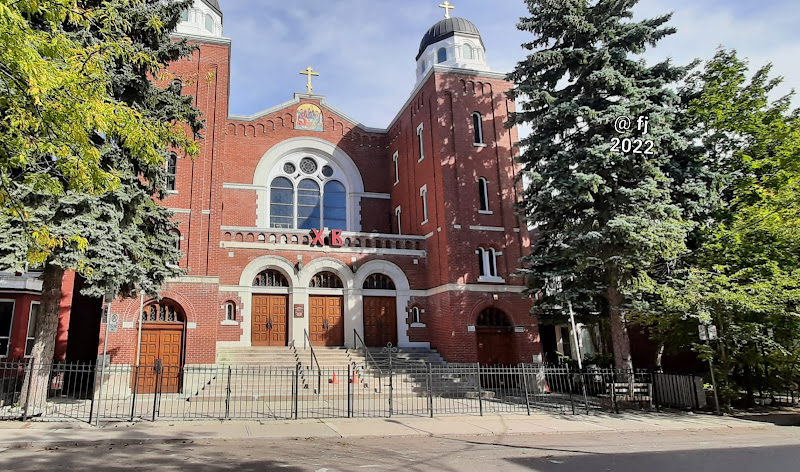
4.9(277)
Holy Trinity Russian Orthodox Cathedral
Holy Trinity Russian Orthodox Church is a community committed to the traditions of the Russian Orthodox faith, offering services and programs in both English and Russian.
23 Henry St, Toronto, ON M5T 1W9
+1 416-979-2990
Thursday: Closed
holytrinity.ws
4.9(250)
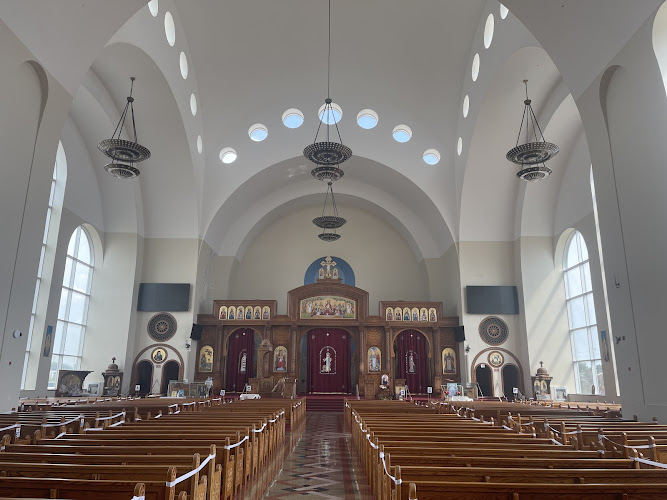
St. Mark Coptic Orthodox Cathedral
St. Mark Coptic Orthodox Church is dedicated to the Coptic Orthodox faith, providing spiritual nourishment and community gatherings for its congregation in Toronto.
455 Ferrier St, Markham, ON L3R 5Z2
+1 416-800-5500
stmarkstoronto.ca
4.9(233)
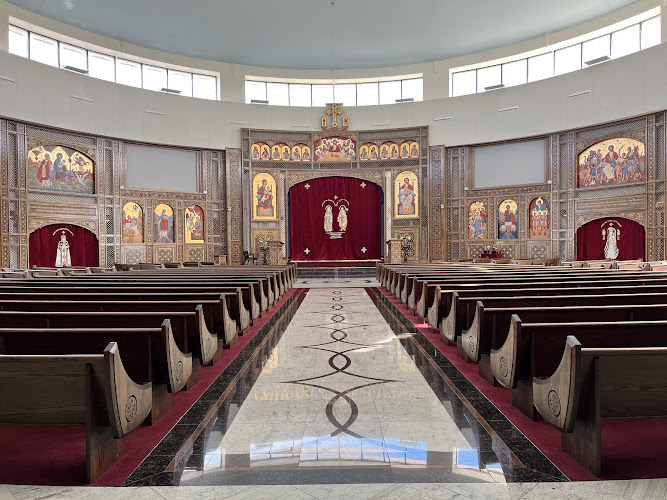
St. Maurice & St. Verena Coptic Orthodox Church (SMSV)
St. Maurice & St. Verena Coptic Orthodox Church emphasizes love, outreach, and integration, believing in supporting each other through hardships while sharing the Good News with the community.
3300 Hwy 7, Markham, ON L3R 5N9
+1 416-800-8888
Thursday: 9a.m.-10p.m.
smsv.ca
Frequently Asked Questions
The Orthodox Church (Eastern Orthodox) considers itself the original Christian Church, preserving the faith of the apostles and the early Church Fathers. Core beliefs include the Holy Trinity, the seven sacraments (called Mysteries), the veneration of icons and saints, and theosis (becoming more like God through grace).
Orthodox and Catholic churches split in the Great Schism of 1054. The Orthodox Church does not recognize the Pope's authority, uses leavened bread in communion, allows married men to become priests, and follows a conciliar model of governance. Theological differences include the filioque clause and views on purgatory.
The Divine Liturgy is the primary Orthodox worship service and is deeply liturgical, featuring chanting, incense, icons, and elaborate vestments. There are no pews in some traditions — congregants stand. The liturgy centers on the Eucharist and typically lasts 60 to 90 minutes.
Search PewSearch's directory and filter by Orthodox to find Greek Orthodox, Russian Orthodox, Antiochian Orthodox, and other Orthodox churches near you with service times and contact information.
Expect a rich sensory experience with icons, incense, and chanting. The service may feel unfamiliar, but visitors are welcome to observe. In most Orthodox churches, only baptized Orthodox Christians receive communion. Modest dress is generally expected.
Yes. Orthodox churches baptize infants by triple immersion shortly after birth. The baptism is immediately followed by Chrismation (anointing with holy oil) and the child's first communion, fully initiating them into the Church.
The Orthodox Church is organized into autocephalous (self-governing) national churches, each led by a patriarch, archbishop, or metropolitan. The Ecumenical Patriarch of Constantinople holds a position of honor but not supreme authority. Each local parish is led by a priest.
For Church Leaders
Are you a Orthodox church leader?
Claim your church page for a premium listing with editable content, staff & events, and more.
Claim Your Church